Arnaldo Brito, organiser of the Spanish Cup and a driving force behind DF65 radio-controlled sailing in Sotogrande, is preparing a competition with up to 60 participants, an international presence and a dream that is beginning to take shape: to bring the 2028 European Championship to this spot in Cádiz.
In Sotogrande, a passion for sailing doesn’t always require large boats. It can also be experienced from the shore, with a remote control in hand, eyes fixed on the wind and small sailing boats that capture all the excitement of a regatta. Here, a few millimetres in the trim can make the difference between gaining or losing several places.
Arnaldo Brito knows this world well. He is one of the driving forces behind the DF65 class in Sotogrande and is now tackling one of his most ambitious projects: organising a Spanish Cup that will bring together national and international sailors.
“This isn’t something that just happens out of the blue. It’s been on my mind from day one, but the moment almost comes of its own accord,” explains Brito.
The fleet had been consolidating for some time, growing modestly but steadily. What was missing was a goal capable of mobilising those who were still hesitant to take the plunge into competition.
And the Cup seems to have achieved precisely that.
A fleet that has doubled in size and a Cup with up to 60 participants
The Spanish Cup was announced just two months ago and, according to Brito, the response has exceeded expectations. Over the last month, the fleet in this class has practically doubled in Spain, particularly in Cádiz and Sotogrande.
The organisers initially planned to bring together between 40 and 50 boats, but the interest generated has led them to raise the limit to 60 participants.
“The limit is due to a technical issue. We have to divide the participants into four fleets and hold the corresponding qualifying races,” he explains.
So far, there are 25 confirmed entries, with sailors from Spain, the United Kingdom and Sweden. Groups are also organising trips from France and Portugal, whilst the fleet from Mallorca and participants from Cartagena and Málaga are expected to attend.
The standard of competition will be another major attraction. Among the Swedish sailors are the third- and fifth-placed competitors in their national rankings, whilst Spain will field a skipper ranked within the top five nationally, alongside other sailors with international success in various dinghy sailing disciplines.
This line-up promises a challenging competition and a good opportunity to gauge the standard the DF65 class is reaching in our country.
The thrill of a major regatta in a boat barely 65 centimetres long
One of the things that most surprises those discovering radio-controlled sailing is just how closely it replicates the sensations of traditional sailing.
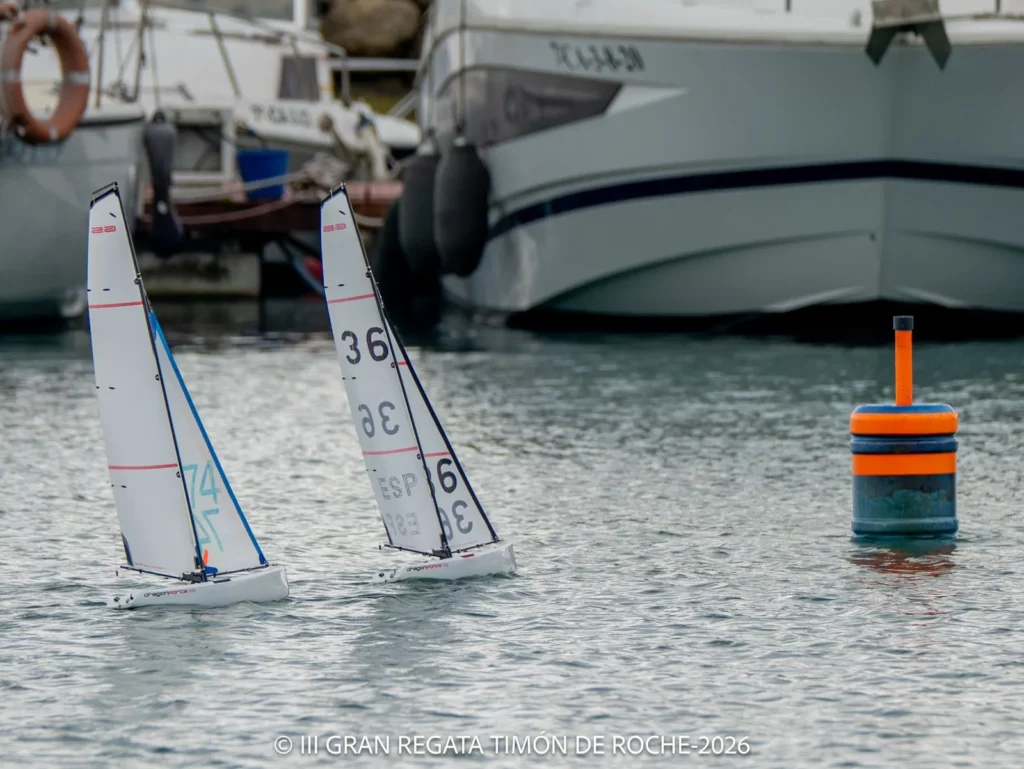
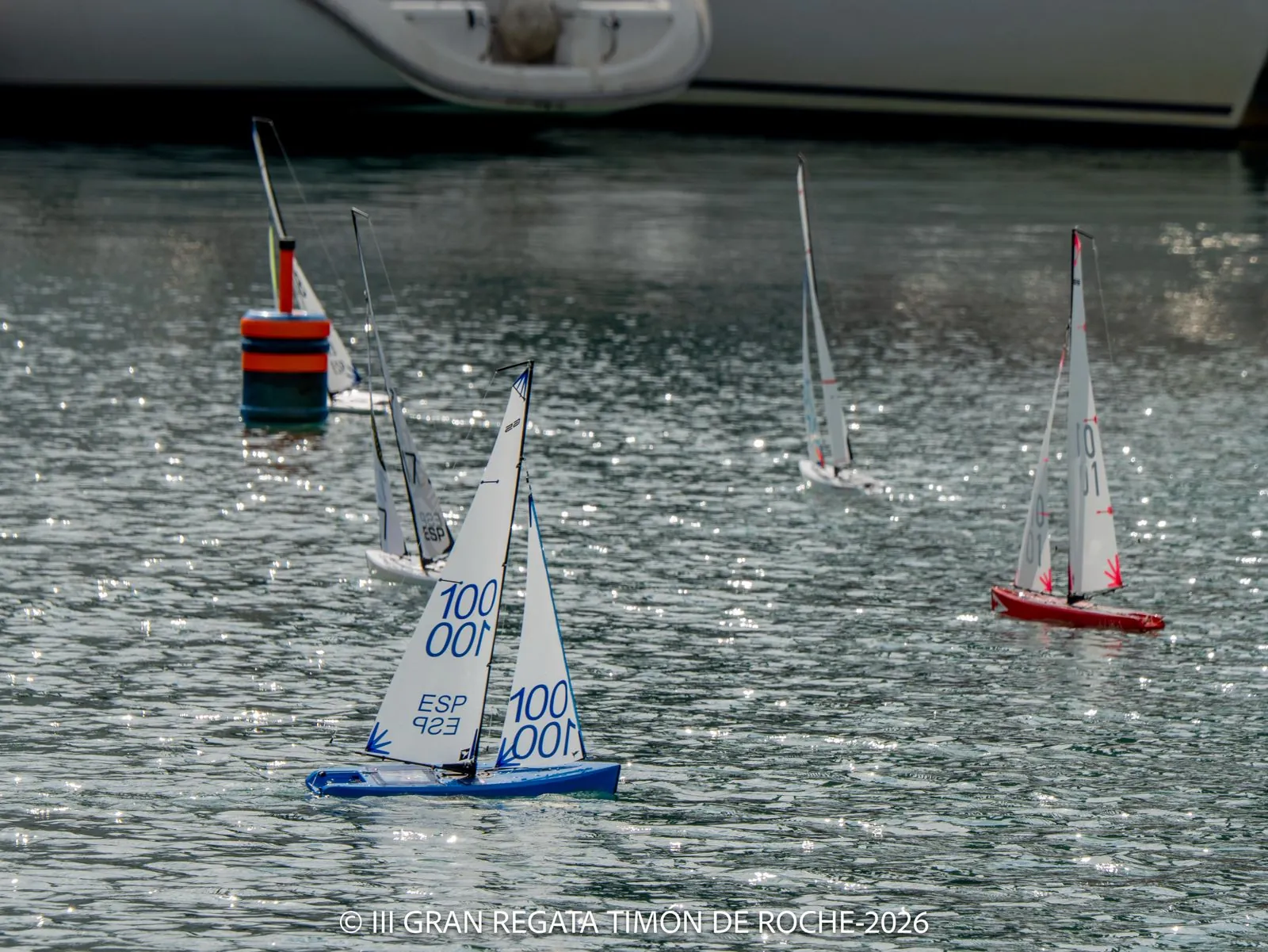
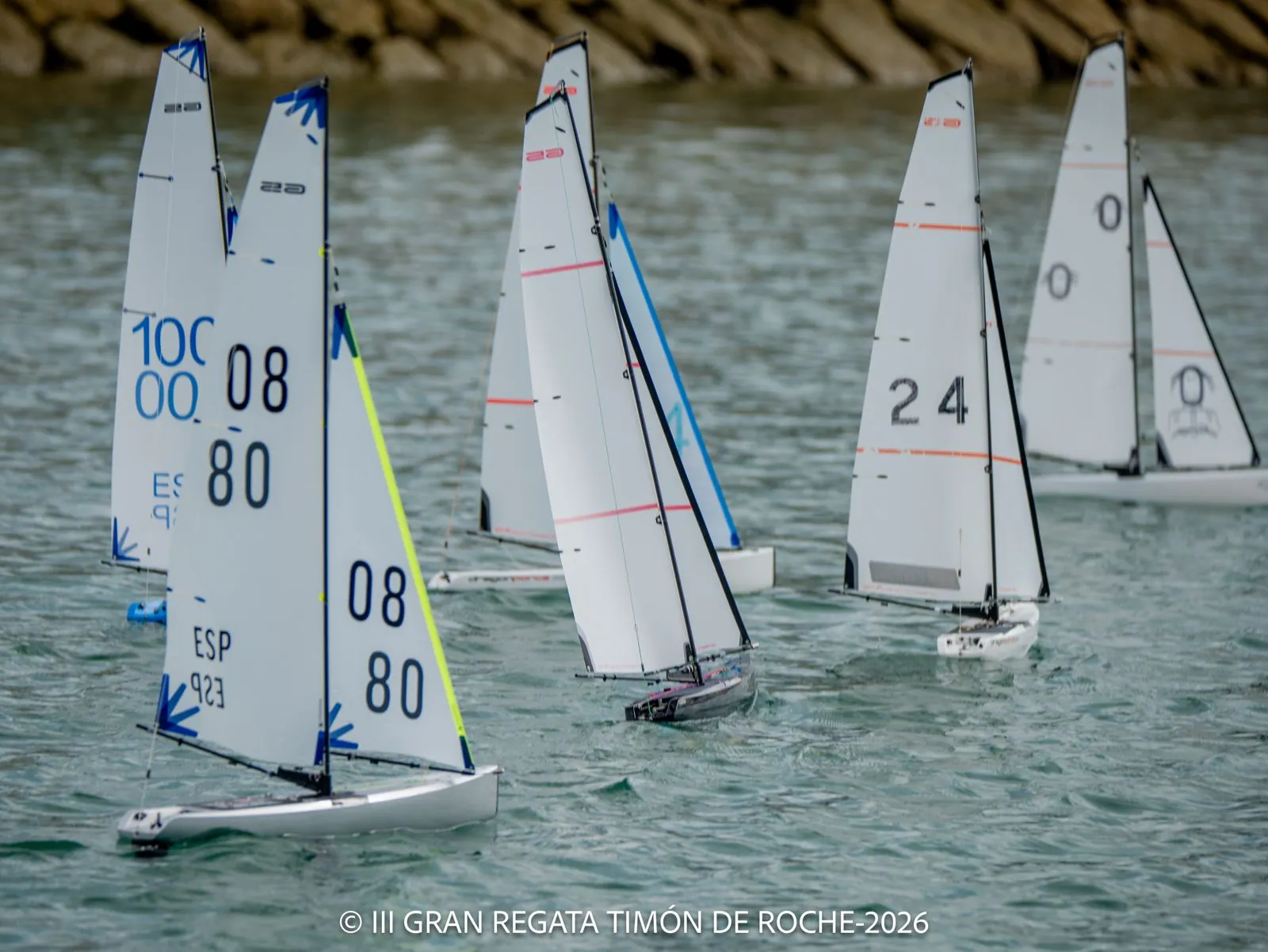
The DF65s are small sailing boats approximately 65 centimetres in length, but their size does not diminish the sporting challenge. Skippers must read the wind, choose the best position at the start, anticipate their rivals’ manoeuvres and make tactical decisions in a matter of seconds.
“The competition unfolds just as it would on a large boat and, even though you’re not actually on deck, it feels as if you were,” says Brito.
The difference is that everything happens much faster. Orientation, the ability to anticipate, and good long-range vision are essential for maintaining control of the boat and correctly reading the race course.
Added to this is an aspect that Arnaldo considers crucial: the preparation of the boat.
“Precision when rigging the boat is essential, because it’s down to millimetres whether it performs well or not.”
In this discipline, a small error in the rigging can have significant consequences. Sailing experience counts, but so do patience, observation and the ability to fine-tune every detail.
The wind in Sotogrande and the challenge of managing four fleets
Organising a Spanish Cup of this nature requires planning which, according to Brito, is not all that different from that needed for a regatta involving larger boats.
“In terms of the competition and the people involved, it’s exactly the same. Perhaps the main difference lies in how you manage the space where it takes place,” he explains.
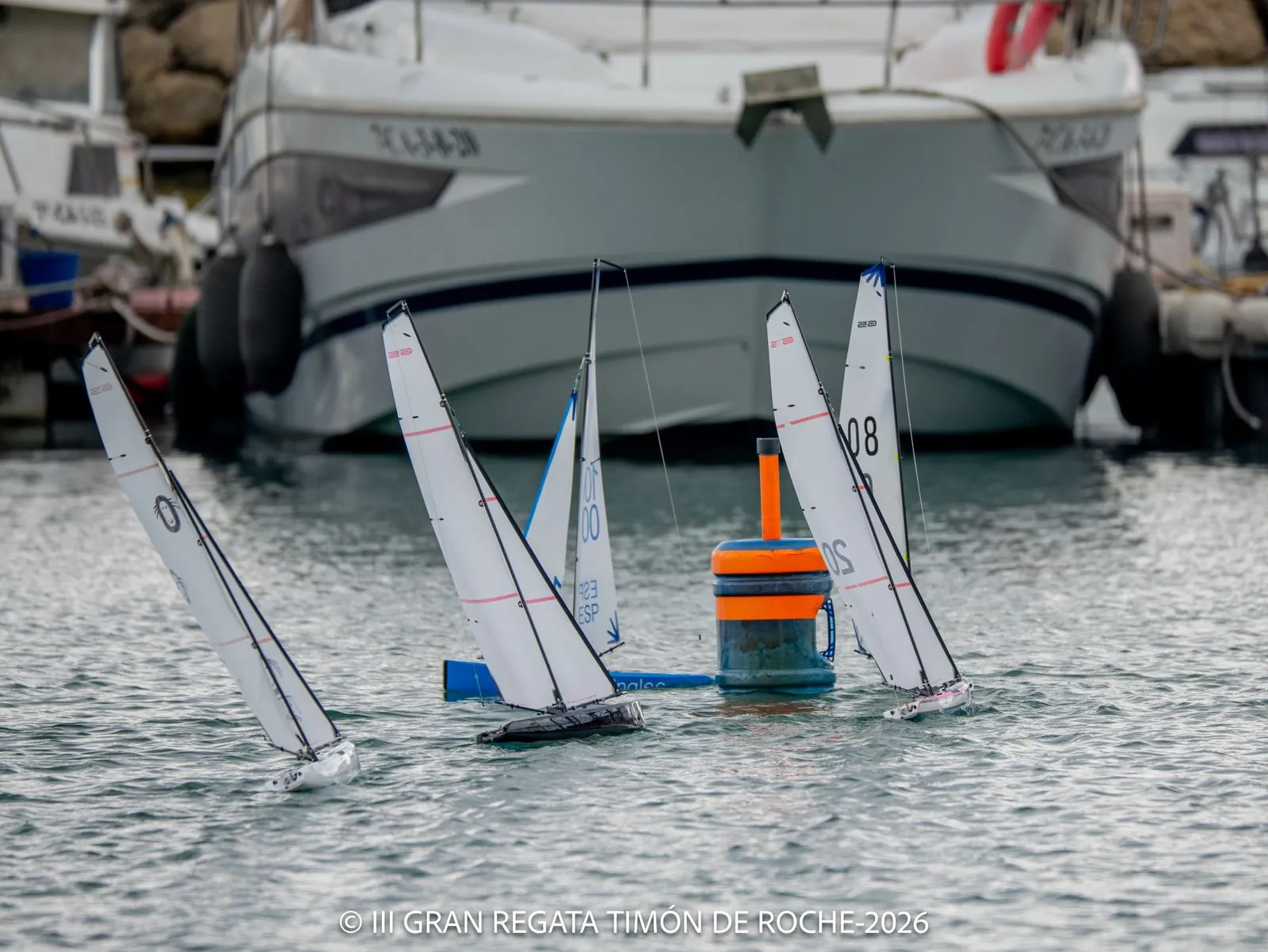
The organisers have two possible race courses at their disposal, both suitable for the prevailing winds in the area. Furthermore, the courses can be adapted quickly, as buoys can be repositioned in a matter of minutes.

However, the main challenge will not necessarily lie in the weather.
“I think the challenge for us, being used to sailing in a fleet, will be managing four fleets that mix together.”
To this end, they will have a computer programme that will enable them to manage the groups and the qualifying rounds.
“It sounds easy, but we’ll see how easy it really is once we’re out there,” says Brito, aware that the organisers will have to respond to new situations for a fleet accustomed to competing in smaller groups.
Building a fanbase: Arnaldo Brito’s true objective
Beyond the sporting results, there is something Brito considers particularly important: ensuring the Cup attracts new fans.
“What I’d like it to leave behind is a following, so that more people are inspired to compete.”
The Sotogrande fleet has managed to form a group where sporting rivalry and friendship coexist. It’s an atmosphere that is also beginning to spark curiosity amongst those who come to watch the regattas.
“We can already see that there’s an audience following us and coming along to watch. That’s also very satisfying. We’ve created a great group of competitors and friends, and the more it grows, the better.”
That growth is precisely one of the key aims of the project. The Cup is not intended to be merely a one-off competition, but a catalyst to consolidate the DF65 class and introduce it to new sailors.
Sotogrande aims to host the 2028 European Championship
The future also features heavily in Brito’s plans. His intention is for Sotogrande to continue hosting the Spanish Cup as long as it maintains the standing it currently holds within the class.
“As long as we are the largest fleet in Spain, it makes perfect sense for the Cup to stay here,” he says.
However, he is aware that the growth of the sport could lead to new bids from other parts of the country in the coming years.
For now, continuity seems assured.
“We’ll definitely be back next year,” he says.
But there is an even more ambitious goal. Sotogrande wants to put forward its bid to host the DF65 European Championship in 2028, a proposal that Brito hopes to announce during the 2027 Spanish Cup.
It would be a significant step for a fleet that has gone from growing steadily to considering the organisation of a major continental event.
For the time being, efforts are focused on organising a Spanish Cup that has already sparked interest both at home and abroad.
And, in the words of Arnaldo Brito, one thing is clear: in Sotogrande, radio-controlled sailing has found more than just a race course. It has found a community eager to compete, share their passion and continue to grow.
Because to have big sailing dreams, you don’t always need big boats.
⛵ DF65 Spanish Cup in Sotogrande
Find out all about the DF65 radio-controlled sailing competition, including registration, participants and race details.


 Straitmagazine